Econow
Think Human Fund
Mission & History
ECONOW is an NGO established on the earth day in 2009. Currently, 68,000 funding members have joined us. Under the vision of ‘To inculcate values of environment in Korea’, Econow educates Eco-leaders who will lead sustainable development and make our everyday practices and thus form Eco-life culture.
As an official partner of UNEP and having a special consultative status of the Economic and Social Council (ECOSOC), ECONOW is running an environmental education program, including the UN Youth Environmental Conference.
As of January 2023, 306,000 personnel have participated in our environmental education programs, and 30,000 personnel annually join our programs.
The Environmental Health Institute annually visits senior citizens of 2,000 apartments.
Moreover, ECONOW has also visited daycare centers and kindergartens to care for vulnerable groups. ECONOW protects the earth and the health of many people by suggesting policies regarding fine dust and chemicals.
Country Information
The National Environmental Awareness Investigation (17 KEI) indicates that “Environmental Information & Education Expansion” is the most effective approach to addressing environmental issues. In 2021, only 797 out of 5,631 Korean middle and high schools included environmental education in their curriculum, and elective environmental subjects were also limited.
This contrasts with European countries, which often have dedicated environmental teachers and make environmental education a national priority. Korea has just 35 environmental teachers among 500,000 educators.
The Ministry of Environment’s annual budget is 10 trillion won, but only 12 billion won (235 won per citizen) is allocated to environmental education.
The Third General Environmental Education Plan (2021–2025) emphasizes the importance of enhancing environmental education to address climate change and environmental challenges.
There is a pressing need for tailored educational programs by category, age, and region to effectively address these issues.
The Need
Chungcheongnam-do province has a high concentration of power plants (30 coal, 23 gas, 4 others) and major industrial complexes (Samsung SDI, Samsung Display, Samsung Electronics, Hyundai Motors), despite a declining population. Significant issues include high energy consumption and ultra-fine particles from these facilities. Environmental education programs are sparse, especially in less populated areas, leaving adults and teenagers with limited opportunities. It is essential to educate future generations in these vulnerable regions about ultra-fine particles, climate change, and energy conservation to foster local environmental leadership.
The Project We Fund
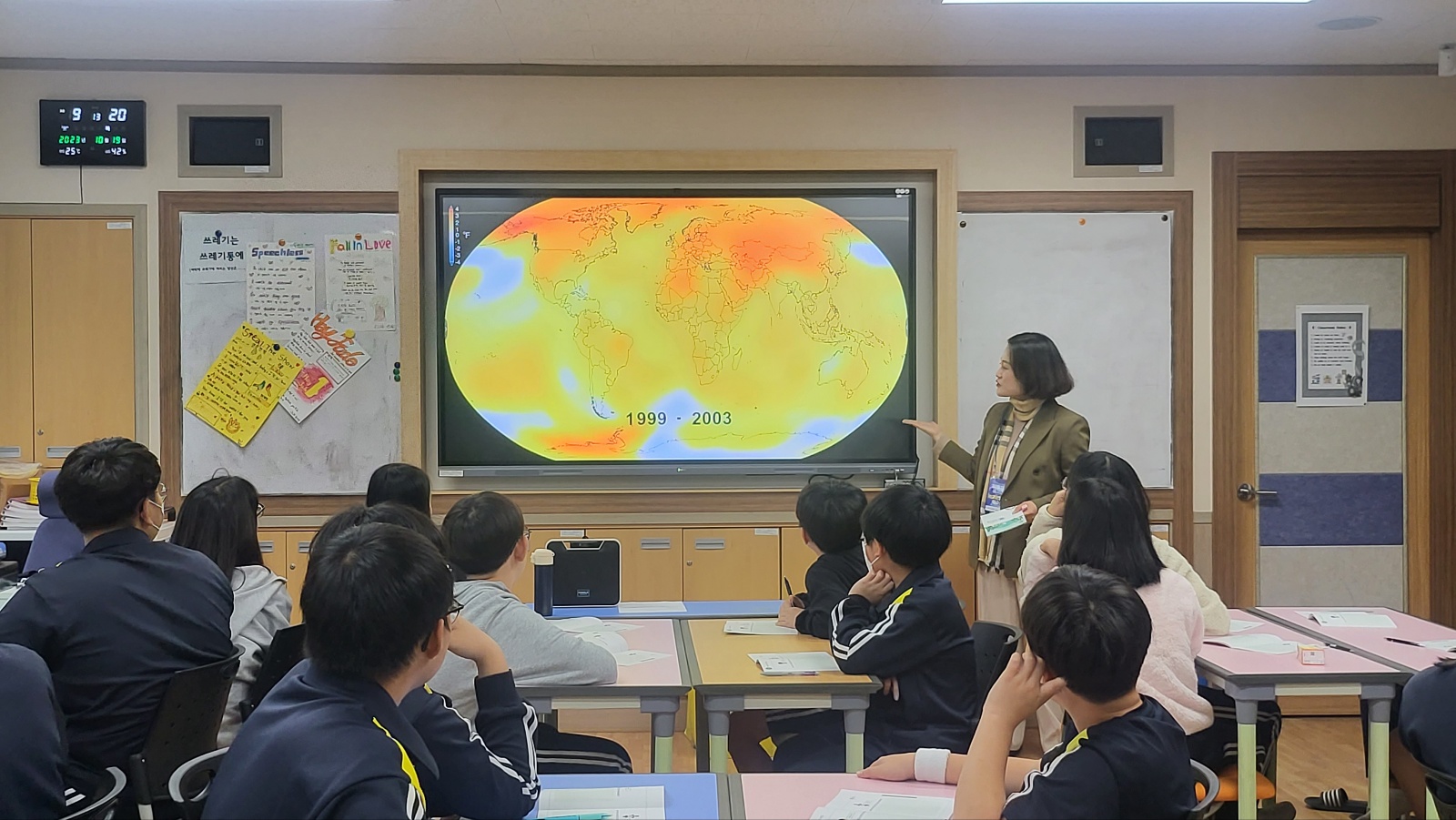
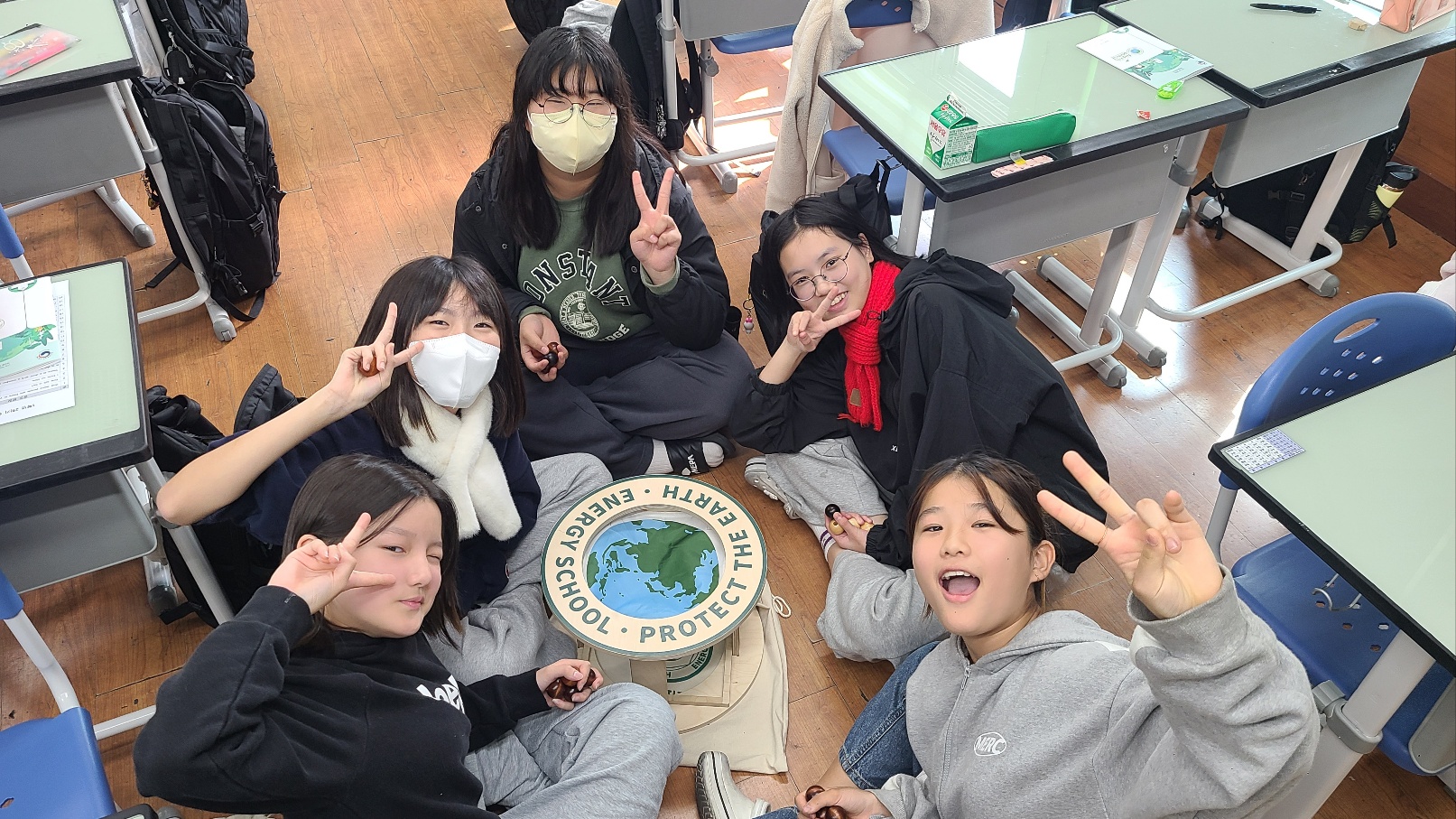
Energy School: Guarding the Earth is a Ministry of Environment-certified program in Korea, providing environmental education to middle schools in Chungcheongnam-do, where such education is lacking.
The program teaches energy conservation and emphasizes individual responsibility in addressing climate change.
Using MIT System Dynamics, it incorporates four UN SDGs: Affordable and Clean Energy (Goal 7), Sustainable Cities and Communities (Goal 11), Responsible Consumption and Production (Goal 12), and Climate Action (Goal 13).
Since 2020, it has reached 14,291 teenagers across 109 schools. Although highly regarded in Chungnam, its continuation beyond the first half of 2024 is uncertain due to funding issues.
Energy School: Guarding the Earth consists of four 50-minute sessions:
- Energy and Natural Environment– Explores the link between energy use and climate change.
- System Thinking and Saving the Polar Bear– Uses system thinking to understand energy’s impact.
- Ultra-Fine Particles and Energy – Highlights the issue of ultra-fine particles and the need for efficient energy use.
- Energy and I – Encourages students to create eco-friendly schools and recognize their role in energy conservation.
This program aims to address gaps in environmental education, promote energy-saving practices, and increase environmental awareness among teenagers, who are future global citizens.
The Result
Impacts are assessed using three criteria:
- Questionnaire: Participants complete a survey with 10 questions to evaluate satisfaction, changes in environmental knowledge and attitudes, and loyalty. In 2023, responses from 4,905 participants across 35 schools scored 4.56/5 for satisfaction, 4.47/5 for knowledge and attitude changes, and 4.56/5 for loyalty.
- School Changes: During the eco-school construction phase, participants propose and implement eco-friendly practices like gardening, uniform handovers, and using reusable paper.
- Practice App: A smartphone app tracks participants’ climate actions through photo and video uploads. Econow manages this app, awarding points for certified actions, which encourages ongoing participation through a rewards system.