Xolotl
Think Human Fund
Mission & History
Xolotl S.A.S. de C.V. is a social enterprise founded in San Diego Beach, La Libertad, El Salvador, with a mission to regenerate ecosystems and empower communities by transforming agricultural waste into clean-burning, eco-friendly charcoal.
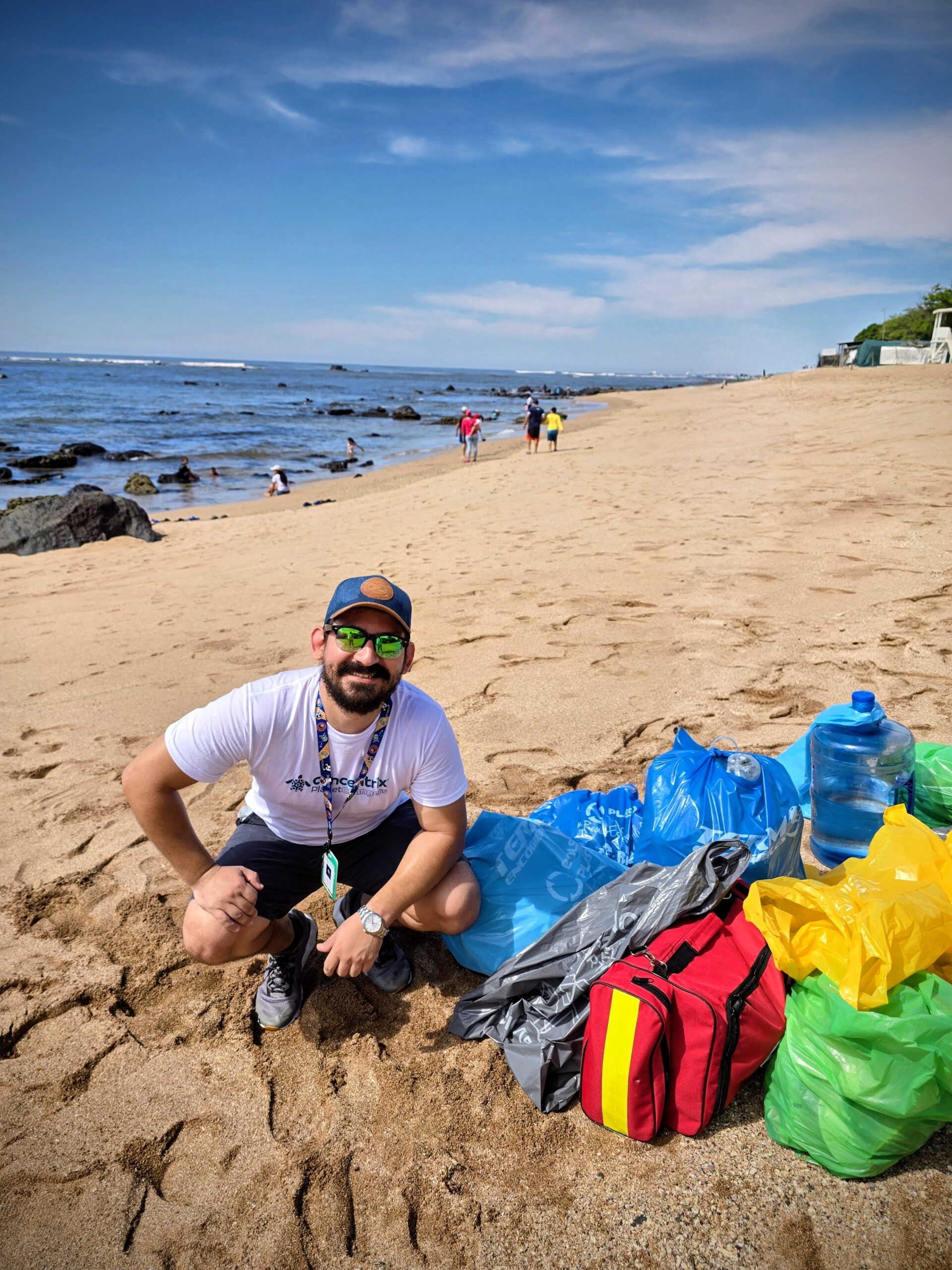
This initiative aims to reduce deforestation, air pollution, and poverty by promoting circular economy principles and utilizing low-emission technology. The organization emerged from Concentrix Global Services’ Project Change, a corporate sustainability initiative, where it was selected amongst eight projects for final incubation. This phase involved technical validation, environmental research, and community engagement, forming the basis for Xolotl’s transition from a pilot to operational scaling.
Country Information
El Salvador, where the project is based, faces significant challenges as many households still rely heavily on firewood as a primary cooking fuel – contributing to rapid deforestation and health risks due to smoke. Climate change exacerbates coastal erosion and poverty, particularly in La Libertad. The country’s rural waste management system is underdeveloped, with less than 15% of organic waste being properly processed. Xolotl addresses these issues by encouraging a local circular economy, aiming to reduce environmental pressure on forests and strengthen community resilience in one of El Salvador’s most climate-vulnerable regions.
The Need
The project’s target is coastal families who suffer from rising deforestation, health issues due to smoke, and waste pollution from limited access to clean energy. Xolotl provides a circular model that not only generates income for women and youth but also offers a cleaner, safer, and more sustainable fuel source. This model is crucial in reducing environmental degradation and enhancing living conditions for vulnerable communities.
The Project We Fund
The Xolotl project transforms organic waste, such as coconut husks and agro-residues, into eco-friendly charcoal briquettes. This initiative offers a sustainable alternative to firewood, addressing issues of deforestation, air pollution, and waste accumulation, while creating green jobs for vulnerable coastal communities. The project involves installing low-emission carbonization and biodigester systems, training local women and youth, and reducing CO emissions and firewood dependency.
The Result
The project anticipates significant impacts, including the repurposing of 20 tons of organic waste annually, preservation of over 75 trees, avoidance of around 80 tons of CO emissions, and maintenance of 10 km of coastline. The initiative will directly benefit 150 individuals, including workers, students, and volunteers, while indirectly aiding 1,000 community members. The results are tracked using a results-based monitoring framework, ensuring transparency and measurable impact.