Econow
Think Human Fund
Mission & History
Econow was established on Earth Day in 2009 with the mission to implant environmental values in Korea. As an official partner of UNEP and a nonprofit organization with a consultative status at the UN Economic and Social Council, Econow focuses on raising eco-leaders and promoting sustainable development. This organization has successfully educated over 334,000 individuals through initiatives such as the UN Youth Environment Assembly and various other programs aimed at cultivating the next generation of environmental activists.
Country Information
In South Korea, environmental education is critically underfunded, with only 0.0027% of the national education budget dedicated to sustainability education. This results in a significant gap in environmental education across schools, with only 14.1% of them offering related subjects. The majority of these classes are taught by non-specialists, contributing to the lack of awareness and action regarding climate issues among students.
The Need in 2026
The Project We Fund
The Result
The Need in 2025
The deficiency of environmental education for young people in regions like the Seoul metropolitan area, where there are high levels of air pollution and energy consumption. Despite these challenges, students have limited exposure to climate education. This lack of education jeopardizes youths’ health, awareness, and capacity to address the climate crisis effectively.
The Project We Fund
The project targets the critical need for climate and energy education among youth in high-risk areas such as the Seoul metropolitan region, where energy consumption and air pollution are among the highest. It provides hands-on, Ministry-certified environmental education to middle schools, enabling students to grasp climate issues and make impactful changes in their lives. The initiative delivers a certified four-session curriculum to middle schools in Seoul, focusing on the energy and climate crisis, systems thinking through games and simulations, fine dust and energy efficiency, and sustainable lifestyles, alongside student-led actions.
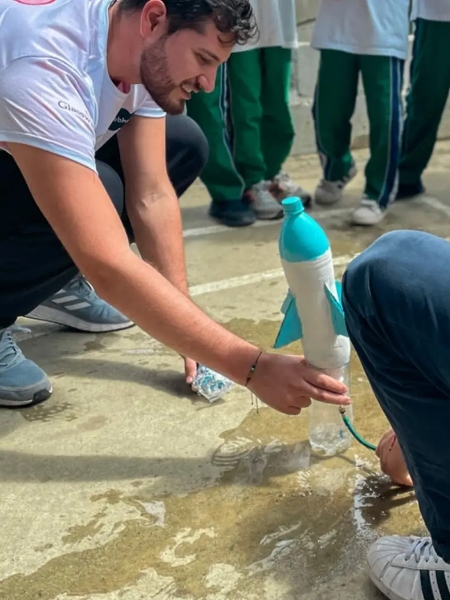
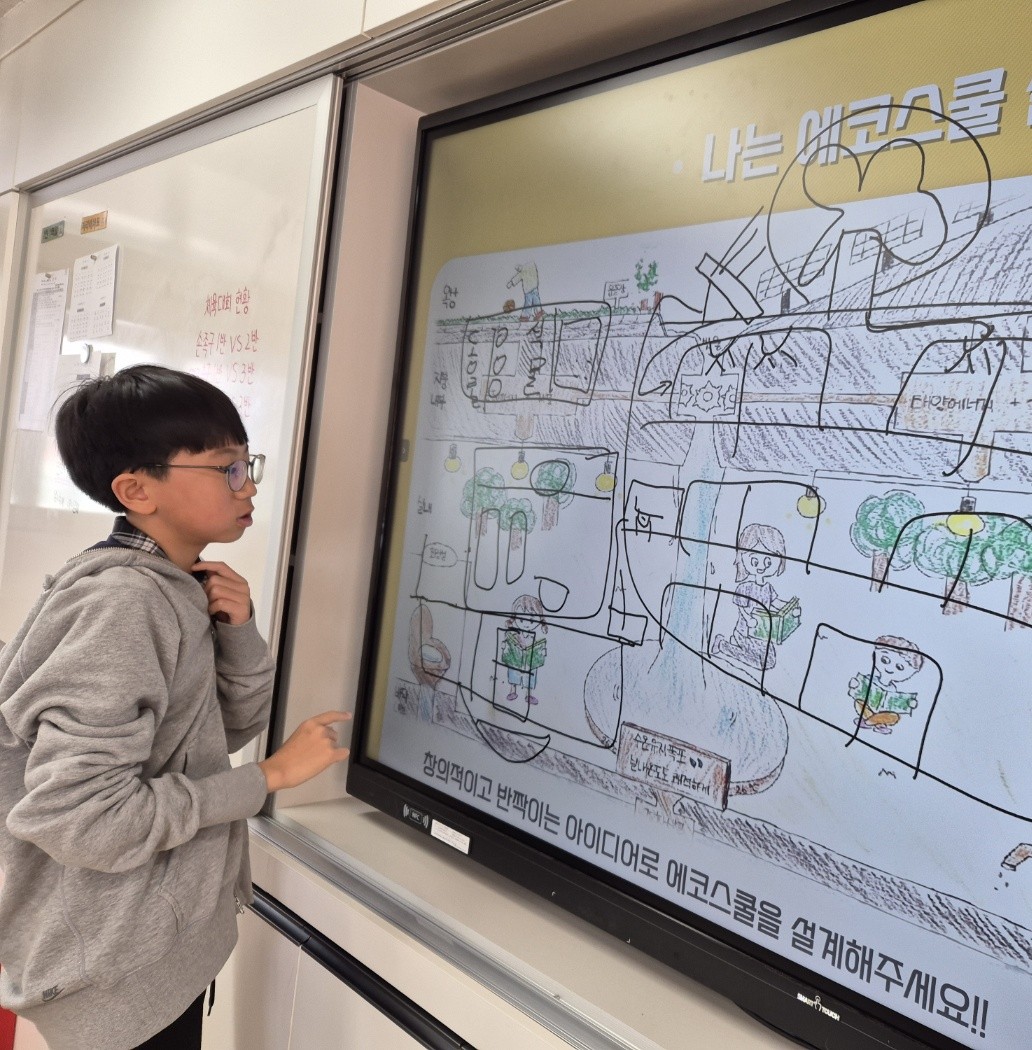
Students engage in practical activities like designing eco-friendly schools, monitoring air quality, and planning actions. Trained Concentrix volunteers are mobilized as co-facilitators to assist in classroom activities and mentor students. Behavioral changes are tracked via a mobile app where students record real-life sustainable actions, such as reducing energy consumption, with monitored activities earning them points.
Additionally, the program encourages community involvement by prompting students to propose sustainability projects for their schools, such as recycling initiatives or reducing single-use items.
The Result
To track impact, first, they administer post-program surveys to students to assess their satisfaction, shifts in environmental knowledge, attitudes, and behaviors, as well as their eagerness to persist in sustainable practices. Second, during the “Eco-School Design” session, students propose tangible improvements for their schools—like recycling campaigns or school gardens—illustrating the program’s impact on their surroundings. Finally, they utilize a mobile app where students upload photos or videos of their eco-friendly activities. These actions are verified and rewarded with points, enabling us to track continuous engagement and the lasting nature of their behavioral changes.
2025 Annual Report
Aimed at enriching the climate and energy education landscape, this initiative specifically targeted middle school students aged 13-15 in the Seoul metropolitan area, offering them vital learning experiences certified by the Ministry. Throughout this project, they engaged 575 students across three schools in a series of four interactive sessions. These sessions featured discussions on the climate crisis, systems thinking games, energy quizzes, and opportunities for students to share eco-friendly habits. Utilizing the “Haenggarae” app, students documented their real-life energy-saving practices, gaining a deeper understanding of climate and energy issues.
The impact has been profound. Not only have students reported significant changes in their daily habits, but they have also become proactive in tackling environmental challenges. As young eco-leaders, they are now influencing positive changes at home and within their communities. This is now fostering a new generation committed to sustainability.
Testimonies
“Through the lessons, I realized for the first time how closely energy use is connected to the climate crisis. After going home, I started taking small actions right away, like turning off unnecessary lights and thinking twice before buying things. I especially enjoyed the Eco-School design activity—it was exciting to imagine changes we could actually make at our school. It made me feel that we can create real impact, which motivated me to participate even more actively.”
“The classes were really meaningful, but what I liked even more was that I could keep practicing after the program through the Haenggarae app. When I saw the photos my friends uploaded, I felt inspired to try those actions too—and it actually led me to change my behavior. Since we could see and cheer for each other’s efforts through the app, I became more mindful about saving energy and protecting the environment in my daily life.”
“One of the most memorable moments during the class was when the Concentrix assistant teacher introduced ESG and the company’s environmental initiatives. It was the first time I realized that environmental issues are not just something we learn at school, but they can actually be connected to real jobs. It made me think that I would like to work in a field that combines environment and technology in the future, and it became an opportunity for me to think more seriously about my career path.”
============================================================================================================================
The Need in 2024
Chungcheongnam-do province faces environmental challenges due to the concentration of power plants (30 coal, 23 gas, 4 other) and industrial complexes like Samsung and Hyundai, amidst a declining population. Key issues include high energy consumption and ultra-fine particle pollution. Despite the urgency, environmental education programs are lacking, leaving counties with smaller populations particularly underserved. To address this, it’s essential to educate both adults and teenagers on ultra-fine particles, the climate crisis, and energy preservation practices to cultivate leaders who can drive environmental change within these vulnerable communities.
The Project We Fund
“Energy School: Guarding the Earth” is an esteemed environmental education initiative certified by Korea’s Ministry of Environment, focusing on empowering middle school students in Chungcheongnam-do with knowledge and skills to combat the climate crisis. The program emphasizes the role of individuals in driving environmental change, teaching proper energy use practices through MIT System Dynamics.
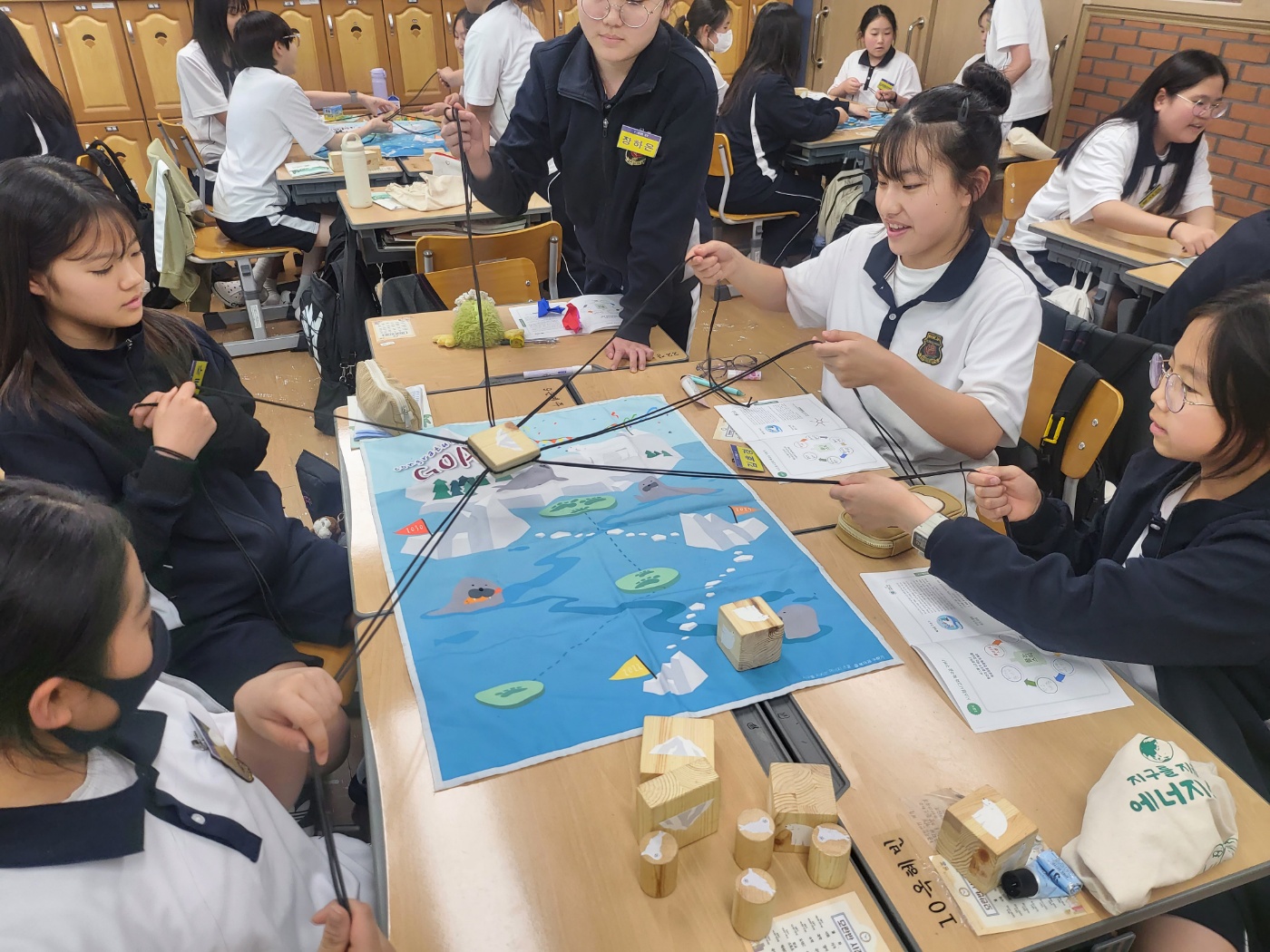
The curriculum is structured into four engaging 50-minute periods: “Energy and Natural Environment” explores the links between energy and climate change; “System Thinking and Saving the Polar Bear” introduces system thinking to understand energy connections; “Ultra-Fine Particles and Energy” addresses the importance of energy efficiency and pollution awareness; and “Energy and I” encourages students to recognize their role as active participants in energy conservation. The program effectively addresses educational blind spots and enhances environmental awareness among future global citizens. Despite its success and high reputation in the Chungnam region, the program’s continuation beyond mid-2024 remains uncertain due to funding challenges.
The Result
The program’s anticipated results are evaluated using three main criteria: Surveillance, School Changes, and Practice App Application. Upon completing the program, participants are surveyed with a 10-question questionnaire to explore their satisfaction, and changes in knowledge and attitudes toward the environment, practice, and pathways, as well as their loyalty.
In 2023, feedback from 4,905 participants across 35 schools showed impressive scores: Satisfaction at 4.56 out of 5, Knowledge and Attitude Change at 4.47, and Loyalty also at 4.56. School changes are implemented during the ‘eco-school construction’ phase of the program’s fourth period, where participants help transform the school environment by establishing gardens, handing over uniforms, and using reusable paper, thereby fostering an eco-friendly school culture.
Additionally, the Practice App Application serves as a tracking tool where participants upload photos and videos of their climate crisis actions. Managed by Econow, this app certifies actions and accumulates points, which can lead to compensation, thus motivating sustainable activities. Continuous monitoring through point accumulation ensures participants remain engaged in eco-friendly practices.
2024 Annual Report
The project impacted 3,363 direct beneficiaries and has notably enhanced environmental awareness among students and their families, inspiring them to adopt sustainable practices and make meaningful eco-friendly changes in their communities.
Testimonies
“The Energy School for Saving the Earth was an excellent program that helped students understand the importance of the environment in a fun and engaging way. As a teacher, it was rewarding to see students take initiative and put what they learned into action. It also complemented our regular curriculum and made the lessons more meaningful. I sincerely hope our school can participate in this program again next year.” -Teacher Ha-yeon Shim, Handeul Mulbit Middle School-
“Through the Energy School for Saving the Earth program, I learned that small actions can lead to big changes. I realized that if I start saving electricity and reducing waste, it can inspire change throughout the whole school. It gave me confidence that even one person can make a difference, and I want to encourage my friends to join me. I hope my actions can be the beginning of making our school more eco-friendly.” -Juhyun Song, student-
“I learned something really important in the Energy School for Saving the Earth program today. I didn’t know there were so many ways to save energy in daily life. I’m going to share what I learned with my parents and try practicing it together at home. I hope we can start making small changes as a family.” -Younggwang Cho, student-